Proposta para a Construção de um Ecossistema de Empreendimentos Sustentáveis na Amazônia

27/03/2011

Hardwood Floors Follow Trees' Natural Shape, Getting More From Less

Bolefloor offers floorboards, cut using custom algorithms, that follow the natural warp and weft of trees.
 
"Life is not a straight line," says Bolefloor's website. Cheesy, yes, but also true -- literally: trees don't naturally grow in ruler-straight lines, so why should the wooden floorboards that we hew out of them? Slashing all the natural curves, knots, and imperfections out of the wood means waste; Bolefloor uses custom software to scan the wood and take its natural forms into account when cutting the boards. Which means, in Bolefloor's words, "more floors per forest." Plus, they look amazing:
bolefloor
Bolefloor
Bolefloor's "optimization" process uses CAD/CAM systems and custom algorithms devised with the help of the Institute of Cybernetics at Tallinn University of Technology. The software scans lumber for natural edges and takes imperfections into account so that boards can be cut to fit together naturally like jigsaw pieces. They claim the process follows each board from the raw-lumber stage all the way to installation in your home, office, or anywhere else you want to show off your commitment to haute naturel interior design.
bolefloor
Not content just to display their ingenious hardwood floor designs, Bolefloor kicks it up a notch and compares their technology to the invention of the printing press. "Just as Gutenberg’s invention literally freed the book from monastic confines, Bolefloor technology makes natural curved-length flooring available at a price not considerably more than today’s fine wood flooring," they crow.
[Read more at Bolefloor | via Springwise]

30/01/2011

Supermicroscópio mostra detalhes raros de objetos do dia a dia

DA BBC BRASIL
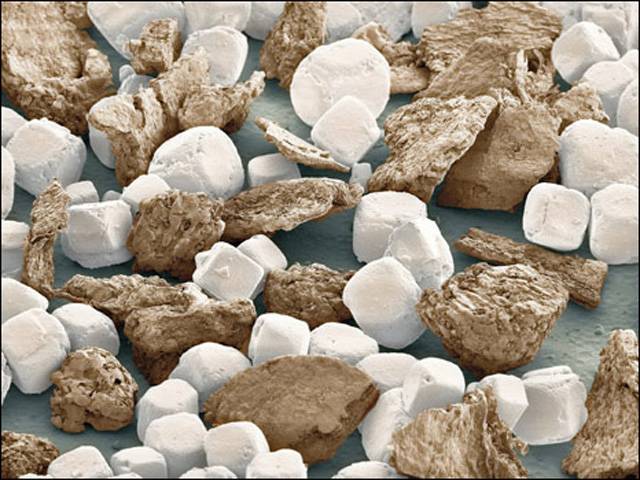
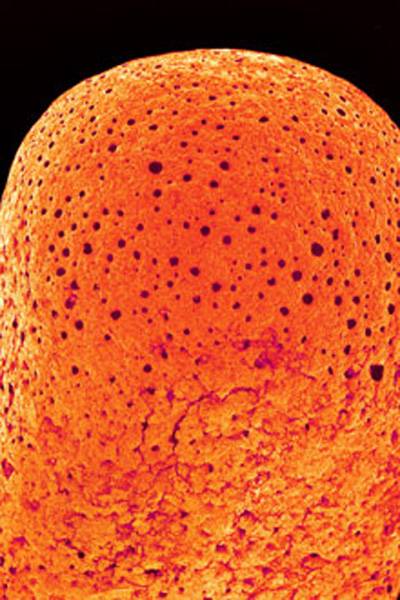
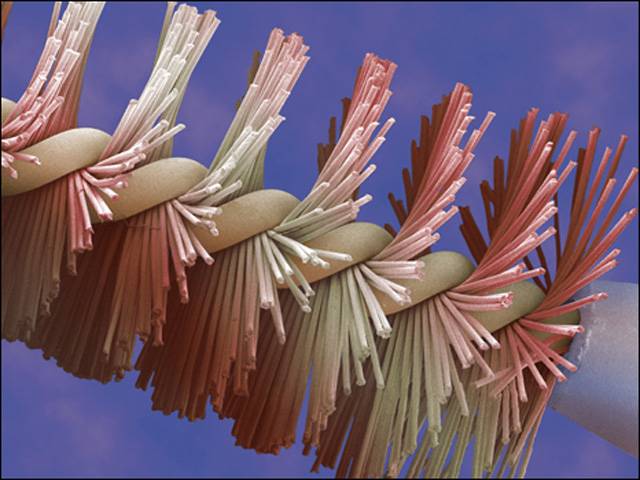
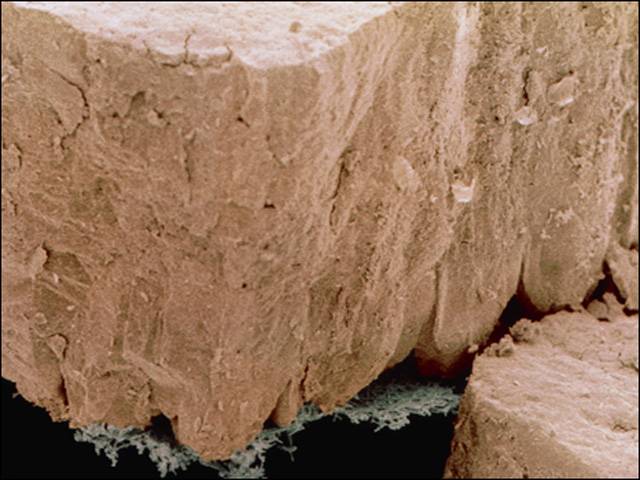
Um fotógrafo revelou detalhes nunca vistos de objetos de uso doméstico ampliando até milhões de vezes o tamanho das imagens capturadas.
Usando um microscópio eletrônico de varredura, Steve Gschmeissner registrou imagens surpreendentes e inusitadas em terceira dimensão de diversos artefatos presentes na casa, como papel adesivo, escova de dentes e fio dental, palito de fósforo e escova de maquiagem.
O microscópio especial bombardeia objetos com um feixe fino de elétrons de alta energia. Parte desses elétrons é desviada e um detector converte este sinal em imagem.
Gschmeissner, 61, diz que o aparelho é "um brinquedo de criança" para ele. Um microscópio deste grau de sofisticação pode custar até R$ 1,6 milhão.
Outra série de fotografias de Gschmeissner exibem detalhes do exoesqueleto de insetos e aracnídeos, como moscas, pulgas e aranhas.


Imagem ampliada em 3-D mostra objetos de uso cotidiano como deste fio dental usado; veja galeria de fotos
Imagem ampliada em 3-D mostra objetos de uso cotidiano como deste fio dental usado; veja galeria de fotos    

15/01/2011

Developing metamaterials that emulate nature's camouflage masters

Nanotechnologists, marine biologists, and signal-processing experts from Rice Univ., the Marine Biological Laboratory in Woods Hole, Mass., and other U.S. universities have won a $6 million grant from the Office of Naval Research to unlock the secrets of nature's best camouflage artists. Ultimately, the team hopes to create "metamaterials" that emulate some of the elegant skin colors and patterns produced by marine animals.
"Our internal nickname for this project is 'squid skin,' but it is really about fundamental research," said Naomi Halas, a nano-optics pioneer at Rice and the principal investigator on the four-year grant. "Our deliverable is knowledge—the basic discoveries that will allow us to make materials that are observant, adaptive and responsive to their environment."
Halas said the project was inspired by the groundbreaking work of grant co-investigator Roger Hanlon, a Woods Hole marine biologist who has spent more than three decades studying the class of animals called cephalopods that includes the squid, octopus and cuttlefish. One of Hanlon's many discoveries is that cephalopod skins contain opsins, the same type of light-sensing proteins that function in eyes.
"The presence of opsin means they have some primitive vision sensor embedded in their skin," Halas said. "So the questions we have are, 'What can we, as engineers, learn from the way these animals perceive light and color? Do their brains play a part, or is this totally downloaded into the skin so it's not using animal CPU time?"
Halas said the project has several tracks. The team's marine biologists—Hanlon and Thomas Cronin of the Univ. of Maryland, Baltimore County—will investigate how cephalopods sense and use light to regulate their skin's patterns, colors, and contrasts.
"This project will enable us to explore an exciting new avenue of vision research—distributed light sensing throughout the skin," Hanlon said. "How and where that visual information is used by the nervous system is likely to uncover some novel neural circuitry."
It will be up to the team's engineers to try and emulate cephalopod skin using new metamaterials, materials that blur the line between material and machine. Halas said the group plans to use patterns of organized nanostructures to create sheets of materials that can change colors quickly—like the pixels of a high-definition television screen—but which can also "see" light in the same way that squid skins do. A key component of the material will be unique clusters of nanomaterials discovered by Rice chemist Stephan Link, a co-investigator on the grant. Halas said Link's materials are very sensitive to changes in their environment and can more easily change colors than other nanomaterials.
Another type of nanoparticle will likely be used for light sensing, and the team will also need a control mechanism, a system for processing incoming light signals and generating camouflage output. Co-investigator Peter Nordlander, a Rice physicist, will work on optics, and materials scientist John Rogers, a co-investigator at the Univ. of Illinois, will help bring everything together into a package that's large enough to be seen without a microscope.
"This is an inherently multidisciplinary problem," Halas said. "No one is going to understand this unless you have marine biologists talking in detail to systems engineers, who talk in detail to nanotechnologists, who talk in detail to the people who integrate everything. There has to be strong dialogue among everyone."
Halas said the biggest surprise so far has been the close affinity that's developed between Hanlon and Rice signal-processing expert Rich Baraniuk, the leader of the team's systems engineering effort.
"You would think that applied mathematicians and marine biologists would have almost nothing in common," she said. "But they have more in common than the rest of us. They are thinking about basically the same problems, but they are thinking about them from very different points of view."
SOURCE

14/01/2011

Casca de banana transformada em pó pode despoluir água

GIULIANA MIRANDA
DE SÃO PAULO
Esnobada por indústrias, restaurantes e até donas de casa, a casca de banana pode em breve dar a volta por cima.
Descobriu-se que, a partir de um pó feito com ela, é possível descontaminar a água com metais pesados de um jeito eficaz e barato.
O projeto é de Milena Boniolo, doutoranda em química pela Ufscar (Universidade Federal de São Carlos, no interior paulista), que teve a ideia ao assistir a uma reportagem sobre o desperdício de banana no Brasil.

Editoria de Arte/Folhapress
"Só na Grande São Paulo, quase quatro toneladas de cascas de banana são desperdiçadas por semana. E isso é apenas nos restaurantes", diz a pesquisadora.
Boniolo já trabalhava com estratégias de despoluição da água, mas eram métodos caros --como as nanopartículas magnéticas--, o que inviabilizava o uso em pequenas indústrias.
Com as cascas de banana, não há esse problema. Como o produto tem pouquíssimo interesse comercial, já existem empresas dispostas a simplesmente doá-las.
MASSA CRÍTICA
"Como o volume de sobras de banana é muito grande, as empresas têm gastos para descartar adequadamente esse material. Isso é um incentivo para que elas participem das pesquisas", afirma.
O método de despoluição se aproveita de um dos princípios básicos da química: os opostos se atraem.
Na casca da banana, há grande quantidade de moléculas carregadas negativamente. Elas conseguem atrair os metais pesados, positivamente carregados.
Para que isso aconteça, no entanto, é preciso potencializar essas propriedades na banana. Isso é feito de forma bastante simples e quase sem gastos de energia.
"Eu comecei fazendo em casa. É realmente muito fácil", diz Boniolo.
As cascas de banana são colocadas em assadeiras e ficam secando ao sol durante quase uma semana. Esse material é então triturado e, depois, passa por uma peneira especial. Isso garante que as partículas sejam uniformes.
O resultado é um pó finíssimo, que é adicionado à água contaminada. Para cada 100 ml a serem despoluídos, usa-se cerca de 5 mg do pó de banana.
Em laboratório, o índice de descontaminação foi de no mínimo 65% a cada vez que a água passava pelo processo. Ou seja: se for colocado em prática repetidas vezes, é possível chegar a níveis altos de "limpeza".
O projeto, que foi apresentado na dissertação de mestrado da pesquisadora no Ipen (Instituto de Pesquisas Energéticas e Nucleares), foi pensado com urânio.
Mas, segundo Boniolo, é eficaz também com outros metais, como cádmio, chumbo e níquel --muito usados na indústria. Além de convites para apresentar a ideia no Brasil e na Inglaterra, a química também ganhou o Prêmio Jovem Cientista.
Agora, segundo ela, é preciso encontrar parceiros para viabilizar o uso da técnica em escala industrial.

03/09/2010

Liquid Wood: 100% Organic replacement for everything plastic

organic liquid wood 2


German inventors have developed a new material which holds the promise of replacing everything plastic with something as natural as wood. The material in question is called the Arboform. It is produced after combining lignin, a discarded element of regular wood with natural resins, flax and fiber.

14/07/2010


The Biomimicry Institute banner
In this issue
donate

The Biomimicry Institute Newsletter - July 2010
Mexican Biomimicry Workshop Addresses Local Design Challenge
Water - lack of it, too much of it, quality of it. That was the theme followed by 23 participants at the recent Biomimicry and Design Workshop in the state of Veracruz, Mexico. The fourth annual Veracruz workshop took participants on a tour of habitats from desert to dry pine forest and from rainforest to mangroves. Along the way, the participants learned about biomimicry and applied the biomimicry methodology to a challenge faced by many communities there - managing storm water in a city located in the rainforest. The Veracruz workshop was organized and taught by Biomimicry Fellows Raúl de Villafranca and Delfín Montañana from the Universidad Iberoamericana (UIA) and Megan Schuknecht and Sherry Ritter from The Biomimicry Institute.
Prior to the week-long workshop, the four instructors taught a half-day biomimicry workshop to over 50 eager professionals and students on the UIA campus, and Megan and Sherry delivered evening lectures on biomimicry and Life's Principles to conclude UIA's diploma course on sustainable design and construction.
Biomimicry Seed Planted in the Netherlands
 
The Netherlands are known for their struggle against the elements, mainly rising water. Now it is time to work with the elements in order to innovate for a truly sustainable society. In the International Center for Sustainable Excellence (ICSE) in Eindhoven, design capital of North Western Europe, a new branch of biomimicry has sprouted. BiomimicryNL is one of the first not-for-profit organizations outside the U.S. that has begun the process of creating a strategic partnership with The Biomimicry Institute and the Biomimicry Guild. Our main focus is to inspire, educate, and create a network of biomimicry-interested professionals here in Europe. In our short existence, already a profound number of Dutch universities have shown interest in incorporating biomimicry in their curriculae, among them the world renowned Design Academy, our neighbor here in Eindhoven. It’s just a matter of time before Dutch biomimicry designs will change the world!
In cooperation with Dayna Baumeister of the Biomimicry Guild, BiomimicryNL is organizing a two-day workshop on October 6th and 7th at the ICSE in Eindhoven, immediately followed by a five-day Biologist at the Design Table Training from October 8-13.
Contributed by Bas Sanders, Netherlands NL
What can an Elephant Teach You about Communication? Join us in South Africa and Find Out!
This is not the zoo. Join us in South Africa in September and learn to view, value, and be inspired by the country's amazing wildlife and flora in the context in which they evolved. You can participate in our Biomimicry & Design Workshop or our second-ever, and first international, Biomimicry Educators' Training Workshop. Both workshops will be held in Tilodi Wilderness, Leeuwpoort, about two hours by road from Johannesburg. Registration for international workshop applicants will open July 19. However, if you would like to attend the educators' workshop, you are invited to apply now (PDF).

AskNature Featured Product
 FLOWE Wind Farm Design
 
 
William Thomas
One problem with conventional wind turbines is that they take up a lot of land. Dr. John Dabiri at the Biological Propulsion Laboratory, California Institute of Technology, is now testing an array of vertical-axis wind turbines based on his research on how fish in schools use small vortices shed by other fish to lower the energy cost of swimming. By testing arrangements of vertical-axis turbines, Dabiri and his colleagues hope to greatly increase power output per acre of land. Visit AskNature, our online database of biological solutions and biomimetic products, for more sources of design inspiration.
Biomimicry Research and Design News Roundup


Address postal inquiries to:
Biomimicry Institute
257 W. Front St.
Suite B
Missoula, MT 59802

10/07/2010

Produtora de insumos para Tintas se limpa com produtos da Fotossintese...

A Nitro Química, empresa do grupo Votorantim, conseguiu um feito neste ano: em vez de emitir dióxido de carbono (CO2) em seu processo produtivo, a empresa sequestrou o gás-estufa. Líder mundial na produção de nitrocelulose - uma resina sintética utilizada em segmentos como pintura automotiva, seladores, tintas de impressão e cosméticos -, a Nitro Química deverá apresentar o resultado em seu segundo inventário anual de emissões gasosas.

Sequestrar carbono só foi possível graças à introdução de duas matérias-primas renováveis na linha de produção da nitrocelulose: a celulose de madeira e o etanol. De acordo com Fábio Filippos, diretor-geral da empresa, a reformulação reduziu o custo de produção da unidade em cerca de 10%.

Até recentemente, a Nitro Química utilizava o línter de algodão, a película que reveste o caroço do algodão, como uma das matérias-primas para a produção da nitrocelulose. Aos poucos, está substituindo o línter pela celulose de madeira, que tem a mesma função e ainda é renovável. "Chegamos a usar 90% de línter no passado. Hoje caímos para 50%", diz Filippos. A expectativa do grupo é que, em dois anos, o percentual de celulose de madeira suba para 80%.

Paralelamente, a empresa trocou o isopropílico, oriundo do petróleo, pelo álcool de cana-de-açúcar. Do volume total de nitrocelulose produzido, 65% já leva etanol, e em dois anos essa proporção subirá para 75%. Os dois componentes representam quase 70% das matérias-primas utilizadas.

"Nossas matérias-primas são de origem natural, renovável e não são tóxicas para o contato humano", diz Rafael Pedro Pellicciotta, gerente de tecnologia e qualidade da empresa, que fatura anualmente R$ 300 milhões. "Estamos nos preparando para sair na frente no setor de tintas".

Como resultado dessas modificações, a unidade de nitrocelulose da empresa vai obter neste ano um sequestro de 0,32 tonelada de CO2 por tonelada produzida de nitrocelulose. Em 2009, a empresa jogou na atmosfera 0,36 tonelada de CO2. "A empresa vai fixar carbono em vez de emitir gás-estufa", diz Nino Bottini, diretor da consultoria Green Domus, contratada para fazer o inventário de emissões.

Com sede em São Paulo, a Nitro Química exporta para mais de 70 países. Dois terços da sua produção anual de 35 mil toneladas de nitrocelulose vão para o exterior.

Cf. Bettina Barros, VALOR 06/jul/2010: Nitro Química passa a sequestrar GEE
Encaminhado por J.Eli da Veiga